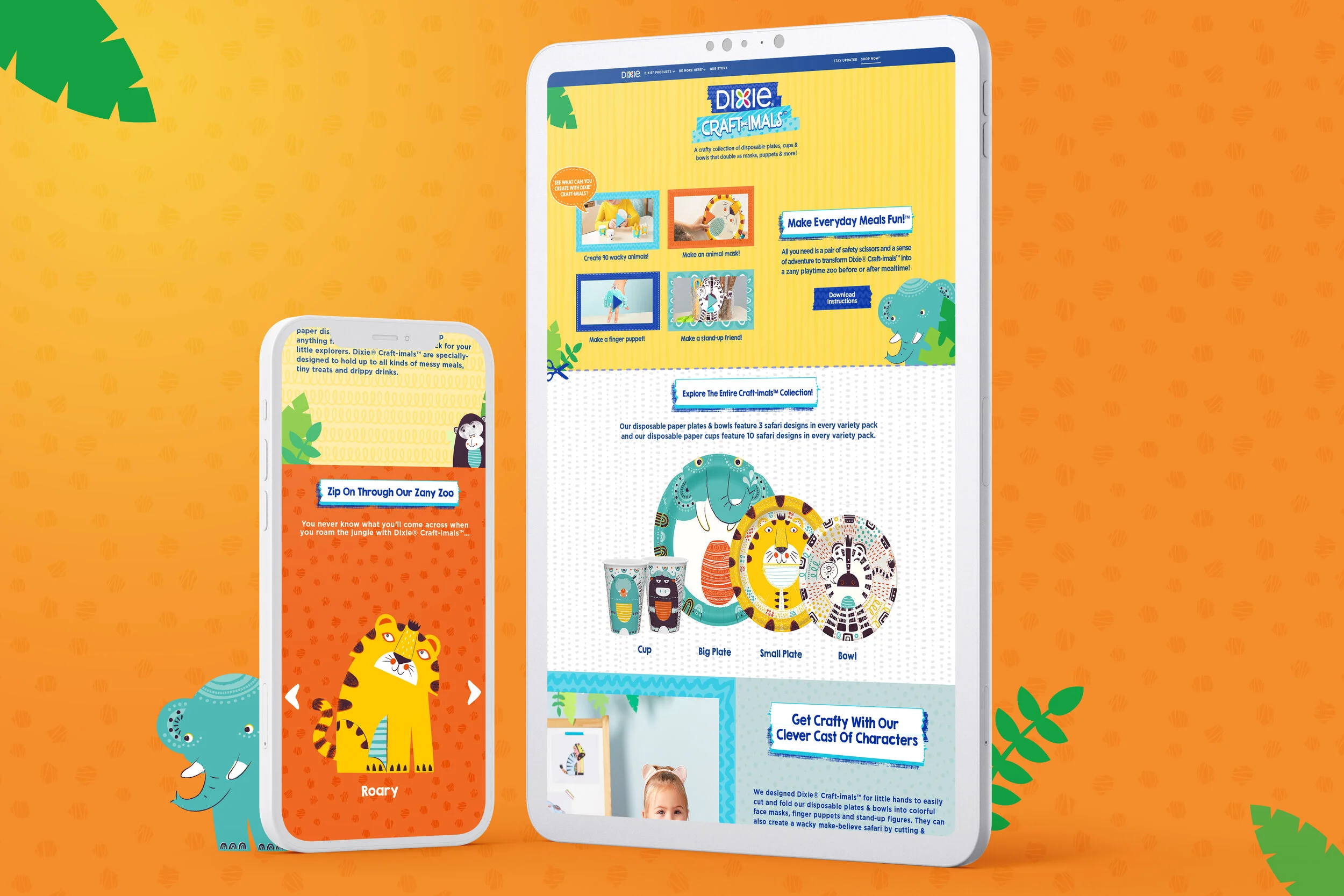
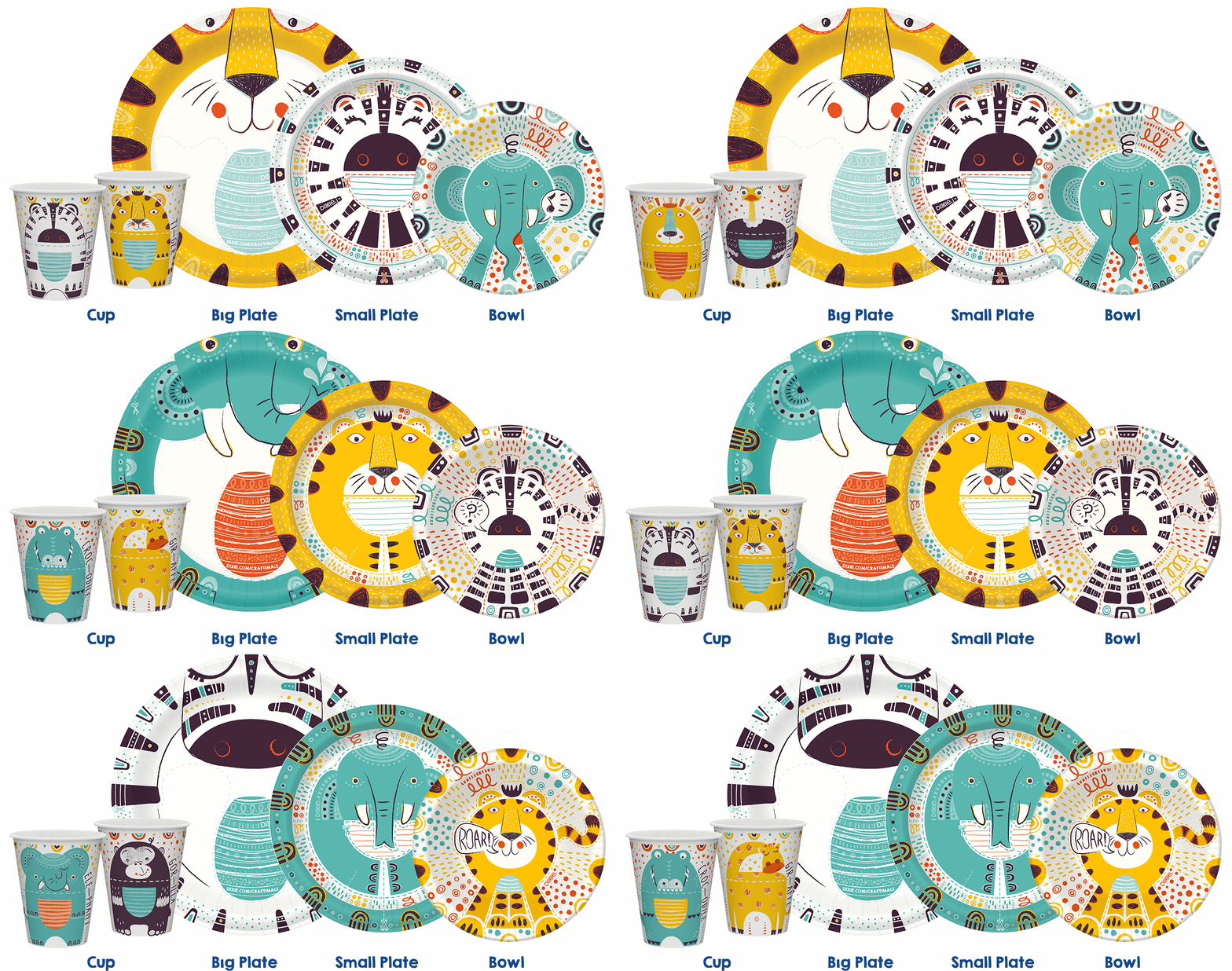
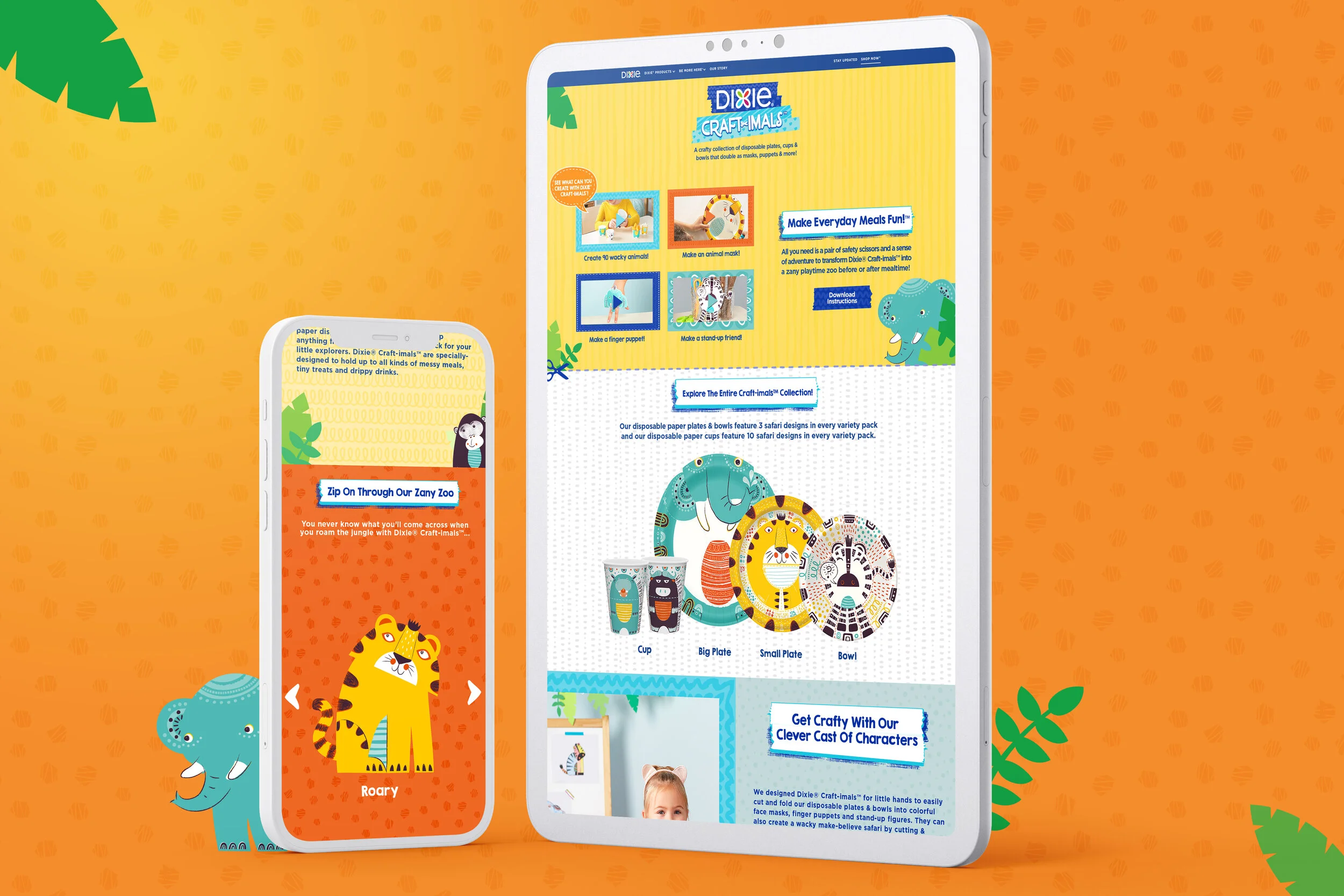
Done entirely in-house. My part was the web design: taking the surface designs made for plates, cups, and bowls and translating them into a digital experience that lived inside the existing Dixie site.
The problem
Dixie had seen decreased growth and market penetration, especially against retailer private-label alternatives. Retailers and consumers (especially millennials) struggled to see the value of a Dixie product versus the cheaper alternative. To differentiate, Dixie launched Dixie Craft-imals: paper plates, bowls, and cups designed for kids.
Primary audience: household shoppers and parents 28–45 with kids under 10 (core age: 4–8).
Because Dixie was an established brand, we had to balance the existing design equities with enough differentiation to drive trial from consumers who typically wouldn’t choose Dixie. Integrating the new visuals into an established website created its own constraint. This wasn’t a freestanding landing page. It had to drive to other site pages.
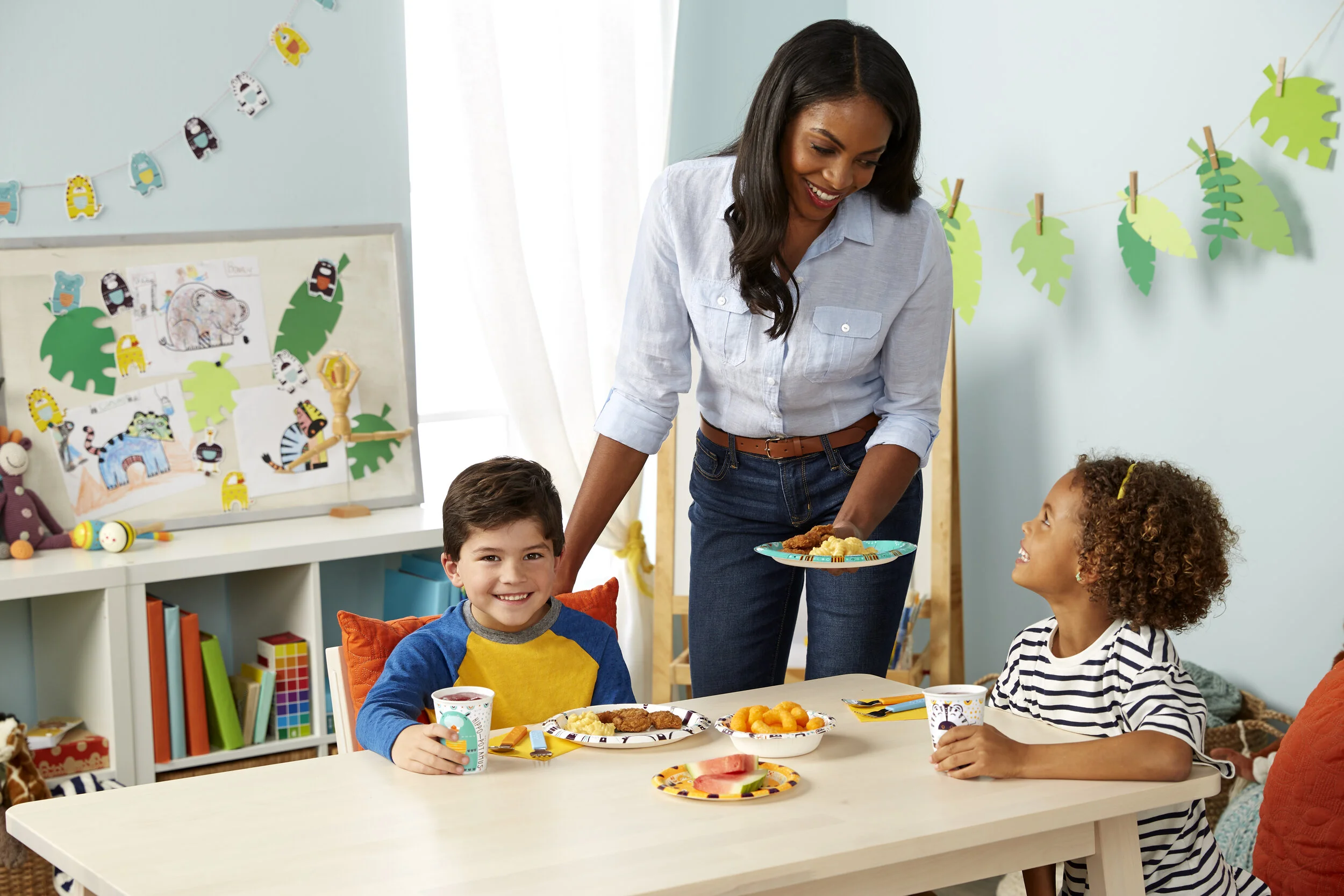
Image credit: Ashley French
The process
The brief called out three things the final design had to carry: introduce the Craft-imals product line, show a how-to on creating the crafts, and showcase the illustrated characters. Lifestyle imagery of the product in use was important. From that, we created a rough wireframe sketch, and I turned it into annotated wireframes.
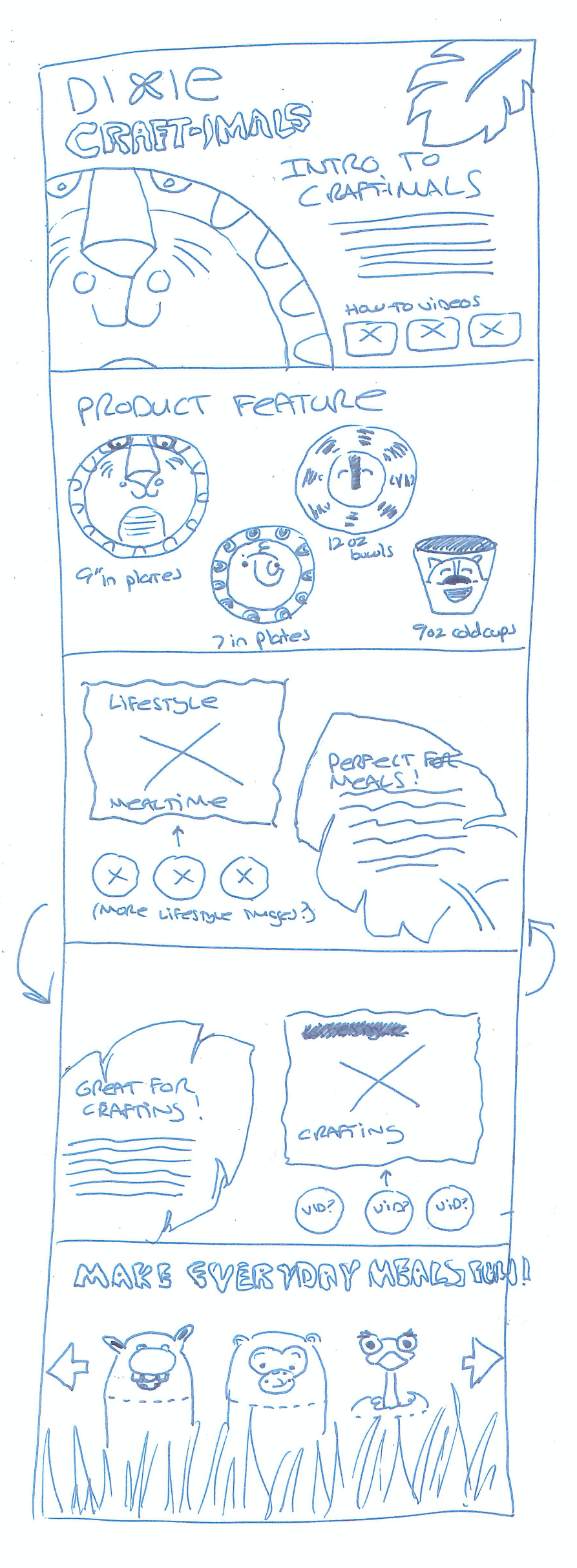
Image credit: Andre Arriaga
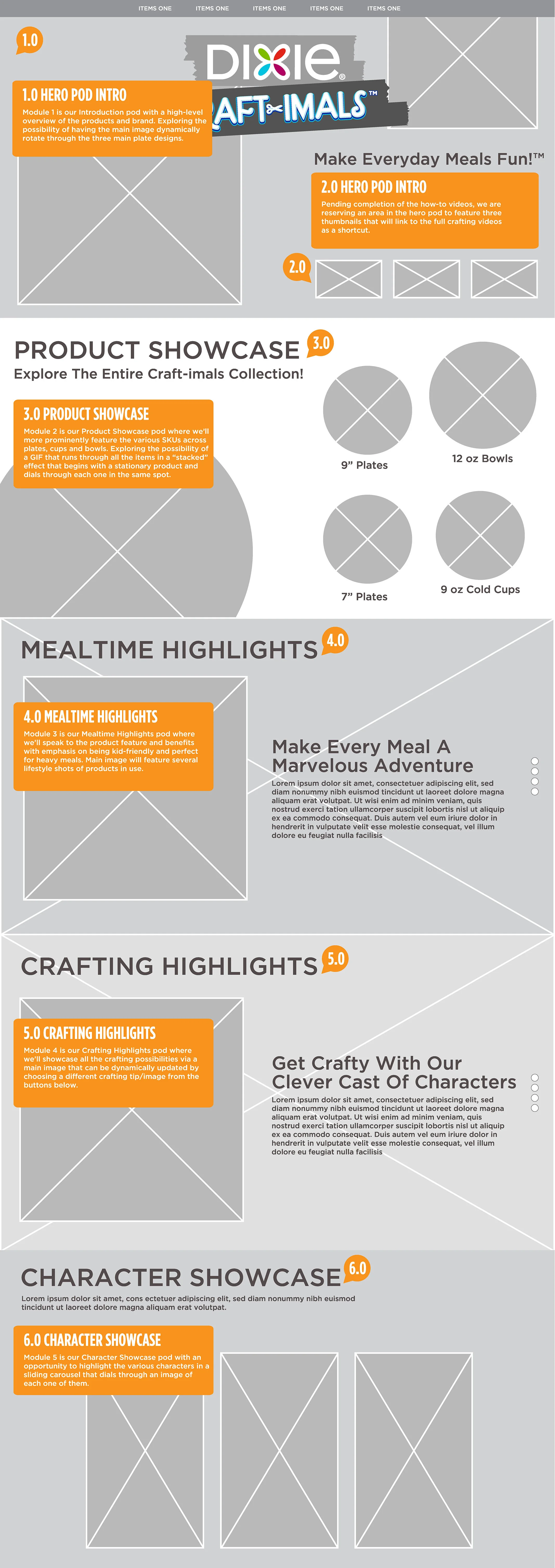
Annotated wireframes.
The learnings
The launch was successful. The product sold in at Amazon and Walmart, two major retail partners. The project also helped the in-house design team win more product landing-page and e-commerce content design work going forward.